
A vinyl car wrap gives you the flexibility to change your vehicle’s exterior appearance without committing to a permanent paint job. However, choosing the right color is only one part of the process. The finish also influences how your vehicle looks, reflects light, and stands out on the road.
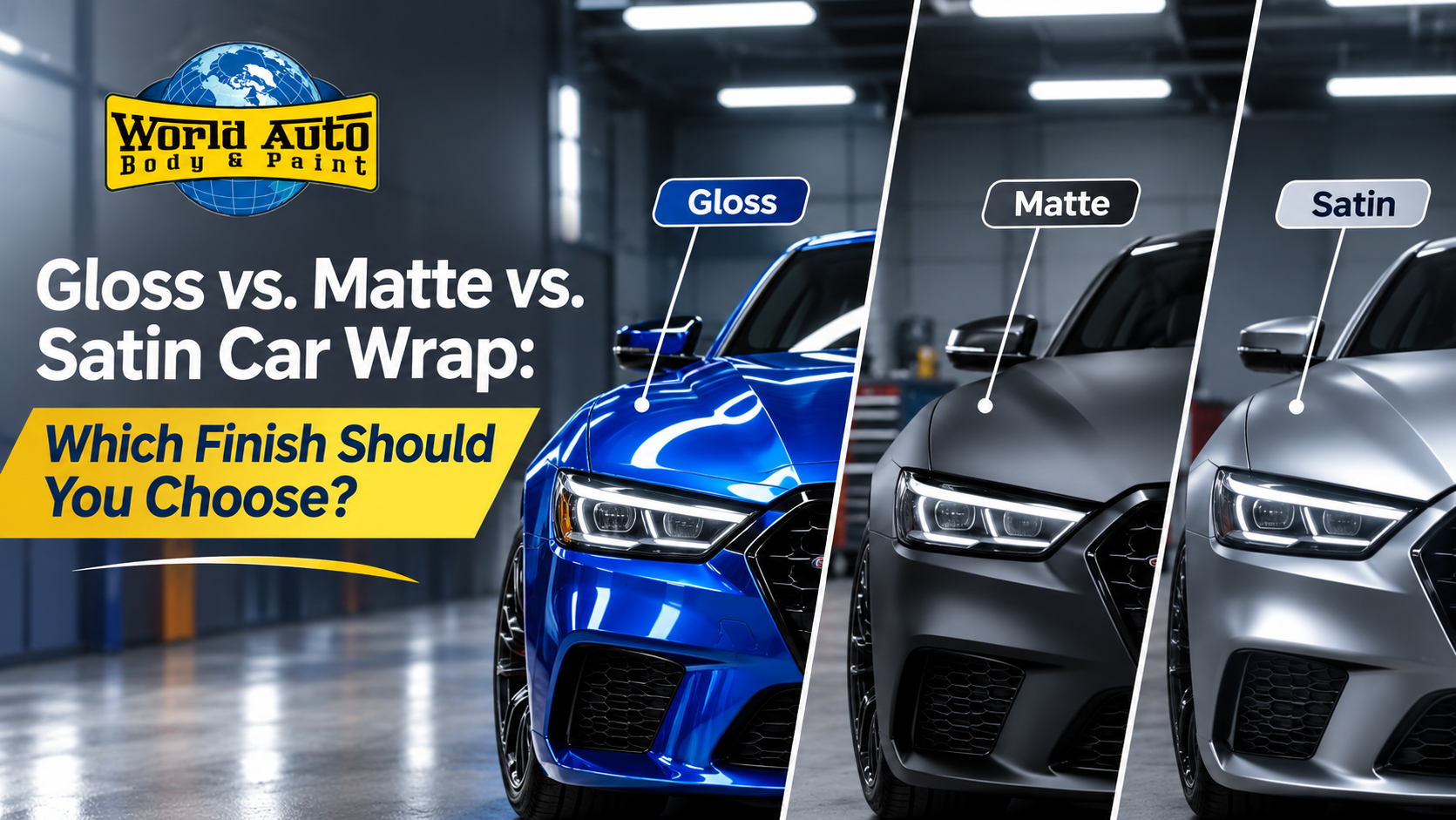
Gloss, matte, and satin are three popular car wrap finishes, each offering a different visual effect. A gloss finish creates a shiny, polished appearance, while matte offers a flat, understated look. Satin sits between the two, providing a subtle sheen without the strong reflections of gloss.
Understanding the differences between these options can help you choose a finish that complements your vehicle’s design and your personal style. If you’re considering vehicle customization in Los Angeles, here’s what you should know before selecting a wrap.
Gloss vs. Matte vs. Satin Car Wrap: What’s the Difference?
The main difference between gloss, matte, and satin car wraps is how their surfaces reflect light. Although the underlying vinyl material may serve the same purpose, the finish changes the way your vehicle’s color and body lines appear.
Each option creates a distinct appearance:
- Gloss: Produces a shiny, reflective surface that resembles traditional automotive paint.
- Matte: Creates a flat, non-reflective appearance with minimal shine.
- Satin: Offers a smooth finish with a soft sheen that falls between gloss and matte.
Your choice depends on the look you want to achieve. Some drivers prefer the bright, polished appearance of gloss, while others choose matte for a more understated style. Satin appeals to those who want a balance between the two.
The right finish can also influence how noticeable dust, fingerprints, water spots, and surface imperfections become. Understanding these differences before choosing a wrap can help you set realistic expectations for its appearance and maintenance.
What Is a Gloss Car Wrap?
A gloss car wrap has a shiny, reflective surface that gives a vehicle a polished appearance. Its smooth finish reflects light and can make colors appear vibrant and visually prominent.
Drivers who like the look of traditional automotive paint often choose gloss vinyl because it provides a similar shine without requiring a permanent color change. It is available in a wide range of shades, including black, white, red, blue, silver, and metallic-inspired colors.
Benefits of a Gloss Car Wrap
A gloss finish offers several advantages for vehicle styling:
- Creates a polished appearance
The reflective surface gives your vehicle a clean, finished look. It can complement both modern and classic vehicle designs, making it a versatile option for different models.
- Makes colors appear vibrant
Gloss finishes can enhance the visual depth of certain colors. Bright shades, deep blacks, and bold reds can appear especially striking because of the way the surface reflects light.
- Resembles traditional automotive paint
If you want to change your vehicle’s color while maintaining a factory-style appearance, gloss is worth considering. It offers a familiar shine without requiring a conventional repaint.
- Works with different vehicle styles
A gloss finish can complement sedans, SUVs, sports cars, and luxury vehicles. It is also suitable for drivers who want a noticeable exterior upgrade without choosing an unusually textured finish.
What Should You Consider Before Choosing Gloss?
Although gloss wraps offer a polished appearance, their reflective surface can make certain imperfections more noticeable.
Dust, water spots, fingerprints, and surface scratches may stand out depending on the color, lighting, and condition of the wrap. Darker gloss finishes, in particular, can show dust and light marks more readily.
Regular cleaning with products approved for vinyl wraps helps maintain the finish. Avoid abrasive materials and harsh chemicals that could damage the surface.
If you prefer a shiny exterior and don’t mind regular cleaning, a gloss car wrap can be an excellent option.
What Is a Matte Car Wrap?
A matte car wrap has a flat, non-reflective surface that gives your vehicle a subtle and understated appearance. Instead of producing the shine associated with traditional automotive paint, it absorbs and diffuses light to create a smooth, muted look.
Matte finishes are popular among drivers who want their vehicles to stand out without relying on a highly reflective exterior. Matte black, charcoal gray, military green, and other muted shades are common choices, although the finish is available in several colors.
Benefits of a Matte Car Wrap
- Creates a distinctive appearance
A matte finish gives your vehicle a different visual character compared with conventional glossy paint. Its subdued surface can make even familiar colors look more understated and distinctive.
- Reduces surface reflections
The non-reflective finish produces minimal glare from direct lighting. This creates a consistent, muted appearance that many drivers prefer for customized vehicles.
- Highlights vehicle body lines
Matte wraps can draw attention to the contours, curves, and overall shape of a vehicle without the strong reflections created by gloss finishes.
- Offers a range of styling possibilities
Matte finishes work particularly well for drivers interested in subtle exterior upgrades. They can complement sports cars, luxury vehicles, sedans, and SUVs, depending on the selected color and overall styling.
What Should You Consider Before Choosing Matte?
Matte finishes often require more careful maintenance than some glossy alternatives. Their surface should not be polished using conventional products intended to restore shine because doing so can create uneven glossy patches.
Stains, fingerprints, and certain surface marks may also be difficult to remove if they are left untreated. Using the wrong cleaning products or abrasive materials can affect the finish.
Follow the vinyl manufacturer’s cleaning recommendations and use products specifically approved for matte wraps.
If you prefer a non-reflective appearance and are comfortable following finish-specific maintenance instructions, a matte car wrap may suit your vehicle.
What Is a Satin Car Wrap?
A satin car wrap combines the visual qualities of gloss and matte finishes. It has a soft sheen that reflects some light without producing the high shine of a glossy surface. The result is a smooth, refined appearance that gives your vehicle a distinctive look without making the exterior overly reflective.
Satin finishes are available in several colors, including black, gray, white, blue, and red. They can also create different visual effects depending on the lighting and the vehicle’s body design.
Drivers who find gloss too reflective but prefer something with more dimension than matte often consider satin a suitable middle ground.
Benefits of a Satin Car Wrap
- Balances Shine and Subtlety
A satin finish offers a moderate level of reflection. It captures some light, giving the vehicle a soft glow without the mirror-like appearance of gloss. This balance makes it appealing to drivers who want a refined exterior.
- Adds Depth to Vehicle Colors
The soft sheen can give certain colors a distinctive appearance. Dark shades, metallic-inspired tones, and neutral colors can look particularly appealing in satin because the finish creates subtle variations under different lighting conditions.
- Complements Different Vehicle Designs
Satin wraps can work well on sedans, sports cars, SUVs, and luxury vehicles. Their balanced appearance allows the finish to complement different body shapes without creating an overly bold or understated effect.
- Offers a Distinctive Alternative to Traditional Finishes
If you want something different from standard automotive paint, satin provides another option for personalizing your vehicle. It can give the exterior a customized appearance while maintaining a relatively understated style.
What Should You Consider Before Choosing Satin?
Although satin finishes offer a balance between gloss and matte, they still require appropriate care. Dirt, water spots, and surface contaminants can affect their appearance if they are not cleaned regularly.
Using conventional polishing compounds or abrasive cleaning products may also alter the finish and create uneven patches. Always follow the vinyl manufacturer’s care instructions and choose cleaning products approved for satin wraps.
If you want a subtle sheen without a highly reflective surface, satin can be a practical styling choice.
Matte vs. Gloss vs. Satin Car Wrap: Key Differences
Although all three finishes can change your vehicle’s exterior appearance, their differences become clearer when you compare how they reflect light, present colors, and respond to everyday use.
Here’s a quick comparison to help you evaluate your options.
| Feature | Gloss | Matte | Satin |
| Appearance | Shiny and polished | Flat and understated | Smooth with a soft sheen |
| Light reflection | High | Minimal | Moderate |
| Color presentation | Bright and reflective | Muted and subdued | Balanced and refined |
| Surface imperfections | Scratches and dust may be noticeable | Marks and stains may be difficult to address | Visibility varies by color and lighting |
| Maintenance | Regular cleaning | Finish-specific cleaning and careful handling | Finish-specific cleaning |
| Styling effect | Classic and vibrant | Bold and understated | Subtle and sophisticated |
Which Finish Makes Colors Look More Vibrant?
Gloss finishes generally create the brightest, most reflective appearance. Their shiny surfaces can make certain colors appear more vivid, particularly under direct lighting.
Matte finishes produce a more subdued effect. They reduce reflections and give colors a flatter appearance, which can work well for drivers who prefer darker or muted shades.
Satin sits between these options. Its soft sheen adds some visual depth without making the color appear as reflective as gloss.
The same color can look noticeably different across all three finishes. If you’re considering a custom vehicle upgrade, reviewing actual vinyl samples can help you understand how each option will look on your car.
Which Finish Makes Vehicle Body Lines Stand Out?
The way light interacts with a wrap can influence how visible a vehicle’s contours appear.
Gloss finishes reflect light across the body panels, creating noticeable highlights around curves and edges. Matte finishes reduce these reflections, allowing the vehicle’s overall shape to create a more subtle visual effect.
Satin offers a middle ground. Its soft reflection can highlight certain contours without producing the stronger highlights associated with gloss.
Your vehicle’s original design also matters. Pronounced curves, sharp body lines, and sculpted panels can look different depending on the selected finish.
Which Car Wrap Finish Is Easiest to Maintain?
There is no universal answer because maintenance depends on the vinyl material, color, driving conditions, and cleaning habits. However, each finish has specific care considerations that you should understand before choosing one.
Maintaining a Gloss Car Wrap
Gloss wraps can generally be cleaned using products approved for vinyl surfaces. Their smooth appearance makes routine washing relatively straightforward.
However, dust, water spots, and light scratches may be more noticeable, particularly on darker colors. Using a soft microfiber cloth, suitable car shampoo, and proper washing techniques can help preserve the finish.
Avoid abrasive brushes and automatic car washes that may damage the vinyl or affect its edges.
Maintaining a Matte Car Wrap
Matte wraps require particular attention because conventional waxes, polishing compounds, and products that add shine can change their appearance.
Use cleaning products specifically approved for matte vinyl. Avoid aggressive rubbing, abrasive sponges, and harsh chemicals that may create shiny patches or damage the surface.
Bird droppings, tree sap, and other contaminants should be removed promptly using manufacturer-approved methods.
Maintaining a Satin Car Wrap
Satin wraps need careful cleaning to preserve their consistent sheen. Products intended to create a glossy finish may alter the surface and produce uneven reflections.
Regular washing with suitable vinyl-safe products can help prevent dirt and contaminants from building up. Avoid polishing the surface unless the wrap manufacturer specifically recommends an appropriate product.
General Car Wrap Maintenance Tips
Regardless of the finish you choose, these practices can help maintain your wrap:
- Wash your vehicle regularly to remove dust, road grime, and other contaminants.
- Use microfiber towels and cleaning products approved for vinyl wraps.
- Avoid abrasive brushes and harsh chemicals.
- Remove bird droppings, tree sap, and other contaminants promptly.
- Follow the manufacturer’s recommendations for washing and protection.
- Inspect the wrap periodically for peeling edges, bubbles, or visible damage.
Proper maintenance helps preserve the appearance of your wrap and can reduce premature wear. If you’re planning broader car customization, consider how much time you’re willing to spend caring for the selected finish before making your decision.
How to Choose Between Gloss, Matte, and Satin Car Wraps
Choosing between gloss, matte, and satin comes down to more than appearance. Your vehicle’s design, preferred color, driving habits, and willingness to maintain the wrap should all influence your decision.
Before selecting a finish, consider the following factors.
1. Consider Your Preferred Appearance
Start by identifying the overall look you want to achieve.
- Choose gloss if you prefer a shiny, polished appearance that resembles traditional automotive paint.
- Choose matte if you want a flat, non-reflective finish with a more understated appearance.
- Choose satin if you prefer a soft sheen that offers a balance between the two.
Think about how you want your vehicle to look in different lighting conditions. A finish that appears subtle indoors may look noticeably different under direct sunlight.
2. Match the Finish to Your Vehicle’s Design
Your vehicle’s body shape and styling can influence how a particular wrap finish looks.
Sports cars with sculpted body panels may benefit from gloss finishes that emphasize their curves and contours. Matte finishes can give performance vehicles a more understated appearance, while satin can highlight body lines without creating strong reflections.
Sedans and SUVs also offer plenty of styling possibilities. A gloss black wrap can create a polished look, while satin gray or matte black can produce a more distinctive exterior.
Consider the vehicle’s original design before selecting a finish. Reviewing vinyl samples against your car’s body can help you make a more informed decision.
3. Think About Your Daily Driving Conditions
Your driving environment can influence how frequently you need to clean and inspect your wrap.
If you regularly drive through busy Los Angeles streets, construction areas, or dusty neighborhoods, your vehicle may collect road grime and airborne debris more quickly.
All three finishes require regular care, but their maintenance requirements differ. Matte and satin wraps may need specific cleaning products to preserve their appearance, while gloss wraps can make certain scratches and water spots more noticeable.
Consider how much time you can dedicate to cleaning your vehicle before choosing a finish.
4. Evaluate Your Cleaning and Maintenance Expectations
Some drivers enjoy keeping their vehicles spotless, while others prefer finishes that require less attention.
Gloss wraps offer a familiar surface appearance but may show dust and light scratches, particularly in darker shades. Matte wraps require careful cleaning because polishing or using the wrong products can change their flat appearance. Satin wraps also need finish-appropriate care to maintain their consistent sheen.
No finish is completely maintenance-free. Understanding the cleaning requirements beforehand can help you avoid products or techniques that may damage the vinyl.
5. Consider Material Quality and Installation
The appearance and lifespan of a wrap depend heavily on the vinyl material and installation quality. Different manufacturers offer products with varying adhesive systems, surface characteristics, and durability specifications.
A professional car wrap installer in LA can help you compare suitable materials and explain how their finishes perform under different conditions.
Proper surface preparation, accurate application, and careful finishing around edges and body contours can also affect the final result. Even an attractive wrap may develop problems if it is installed incorrectly.
6. Set a Realistic Budget
Your budget should account for more than the initial installation price. The total cost may depend on the vehicle’s size, body design, vinyl brand, material type, and installation complexity.
Additional considerations may include surface preparation, removing existing vinyl, addressing paint imperfections, and maintaining the finished wrap.
Ask for a detailed estimate that explains what the installation includes. Comparing quotes based on material and workmanship rather than price alone can help you make a better decision.
Which Car Wrap Finish Looks Best on Different Vehicle Types?
There is no single finish that works best for every vehicle. The right choice depends on the car’s proportions, body lines, original color, and the appearance you want to achieve.
Here are a few combinations worth considering.
Sedans
Sedans often look well-balanced with gloss or satin finishes. Gloss can create a polished appearance, while satin offers a more subtle exterior upgrade.
Matte finishes are another option for drivers who prefer understated styling, particularly in black, gray, and other muted shades.
Sports Cars
Sports cars often have sculpted panels, sharp contours, and aerodynamic details that create opportunities for different wrap finishes.
Gloss colors can emphasize curves and reflections, while matte finishes give the vehicle a more subdued appearance. Satin can highlight the body shape without producing excessive shine.
SUVs
SUVs have larger body panels, which provide plenty of room to experiment with different finishes.
Matte black can create a bold appearance, gloss white or black can produce a clean, polished look, and satin gray can offer a balanced alternative.
Luxury Vehicles
Luxury vehicles often suit finishes that complement their original design rather than overpower it.
Gloss can maintain a traditional, refined appearance, while satin offers a subtle sheen. Matte can create a more distinctive look for owners who prefer customized styling.
These are general styling suggestions rather than strict rules. The best finish is the one that complements your vehicle and matches your personal preferences.
How Long Do Gloss, Matte, and Satin Car Wraps Last?
The lifespan of a vinyl car wrap depends on several factors, including material quality, installation, exposure to sunlight, driving conditions, and maintenance habits.
A high-quality wrap that is installed correctly and maintained according to the manufacturer’s recommendations can last several years. However, the exact lifespan varies by product and application.
The finish alone does not determine how long a wrap will last. A gloss wrap is not automatically more durable than a matte or satin option. The vinyl construction and product specifications matter more.
Factors That Affect Car Wrap Lifespan
- Sun Exposure: Prolonged exposure to direct sunlight and ultraviolet radiation can contribute to fading, discoloration, and material deterioration. Parking in covered areas when possible can help reduce exposure.
- Road Debris: Small stones, dirt, and other debris can cause scratches, chips, or damage to the vinyl surface. Keeping a reasonable distance from other vehicles can help limit exposure.
- Cleaning Habits: Harsh chemicals, abrasive brushes, and incorrect washing methods can affect the finish and adhesive. Use products recommended by the vinyl manufacturer.
- Installation Quality: Improper surface preparation, trapped contaminants, and poorly finished edges can contribute to bubbling, lifting, and premature peeling.
- Environmental Conditions: Heat, moisture, and changing weather conditions can affect vinyl over time. Vehicles regularly exposed to outdoor conditions may need more frequent inspections.
Signs Your Car Wrap May Need Attention
Inspect your vehicle periodically for:
- Peeling or lifting around panel edges
- Bubbles or wrinkles beneath the vinyl
- Noticeable fading or discoloration
- Tears, deep scratches, or damaged sections
- Areas where the adhesive no longer holds properly
Addressing minor problems early may prevent them from spreading. If the vinyl has deteriorated significantly, professional removal and a new installation may be necessary.
Why Professional Car Wrap Installation Matters
Even high-quality vinyl can produce disappointing results when it is installed incorrectly. Professional installation helps ensure that the material fits the vehicle’s contours, adheres properly, and maintains a consistent appearance across different panels.
Here are some reasons installation quality matters.
Proper Surface Preparation
The vehicle’s exterior must be clean and properly prepared before the vinyl is applied. Dirt, grease, wax residue, and other contaminants can interfere with adhesion and create visible imperfections.
Existing paint damage should also be assessed before installation. Loose or peeling paint may not provide a suitable surface for a wrap.
Accurate Application Around Curves and Edges
Vehicle body panels have different shapes, curves, recesses, and edges. Applying vinyl around these areas requires appropriate techniques to prevent excessive stretching, wrinkles, and visible seams.
An experienced installer understands how to work with the material while maintaining a consistent finish.
Reduced Risk of Bubbles and Peeling
Trapped air, improper adhesion, and poorly finished edges can cause bubbles or lifting over time. Careful application and finishing help reduce these problems.
Guidance on Material Selection and Maintenance
Professional guidance can help you choose a suitable vinyl product and understand its care requirements. An installer can also explain the manufacturer’s warranty conditions and the limitations of the selected material.
If you’re considering a broader exterior upgrade, professional vehicle customization guidance can help you coordinate your wrap finish with other styling elements.
Choose the Right Car Wrap Finish for Your Vehicle
Gloss, matte, and satin car wraps each offer a different way to personalize your vehicle. Gloss creates a shiny, polished appearance, matte provides a flat and understated look, and satin delivers a soft sheen between the two.
The right option depends on your styling preferences, vehicle design, and maintenance expectations. Consider how each finish looks under different lighting conditions, how much cleaning it requires, and how it complements your vehicle’s original body lines.
Material quality and professional installation also influence the final appearance and longevity of a wrap. Taking time to compare your options can help you choose a finish that suits your vehicle and delivers the look you want.
If you’re considering exterior upgrades in Los Angeles, World Auto Body & Paint Center can help with its available automotive appearance and customization services. Contact the team to discuss your vehicle’s requirements and explore suitable options for its exterior.
Frequently Asked Questions
1. What Is the Difference Between Gloss, Matte, and Satin Car Wraps?
Gloss wraps have a shiny, reflective surface, while matte wraps have a flat appearance with minimal reflection. Satin wraps fall between the two, offering a smooth finish with a soft sheen. Each creates a different visual effect and has specific maintenance requirements.
2. Is a Matte Car Wrap Better Than a Gloss Car Wrap?
Neither finish is universally better. Matte is suitable for drivers who prefer a subtle, non-reflective appearance, while gloss works well for those who want a shiny, polished look. Your preferred styling and willingness to follow the recommended maintenance routine should guide your choice.
3. Does a Satin Car Wrap Look Shiny?
A satin car wrap has a gentle sheen but does not reflect light as strongly as gloss vinyl. It creates a smooth, slightly luminous appearance that offers more visual depth than a flat matte finish without producing a mirror-like shine.
4. Which Car Wrap Finish Is Easiest to Clean?
Cleaning difficulty depends on the vinyl material, color, and type of contamination. Gloss wraps are generally straightforward to wash using suitable products, while matte and satin finishes require specific care to avoid changing their surface appearance. Always follow the manufacturer’s cleaning instructions.
5. Do Matte Car Wraps Scratch More Easily?
Not necessarily. Scratch resistance depends primarily on the vinyl material and its protective construction rather than the matte finish alone. However, scratches and surface marks can be difficult to correct on matte vinyl because polishing may create unwanted glossy patches.
6. Does a Gloss Car Wrap Look Like Factory Paint?
A high-quality gloss vinyl wrap can resemble the shine of traditional automotive paint. However, the overall appearance depends on the vinyl material, color, surface condition, and installation quality. A wrap is still a vinyl covering rather than a conventional paint finish.
7. Which Car Wrap Finish Lasts the Longest?
Gloss, matte, and satin finishes do not have a universal lifespan ranking. Durability depends more on vinyl quality, installation, sunlight exposure, driving conditions, and maintenance than on the finish itself. Check the manufacturer’s product specifications for expected performance and warranty information.
8. Can You Change a Matte Car Wrap to Gloss?
Yes. A matte wrap can generally be removed and replaced with gloss vinyl if the underlying paint is in suitable condition. The existing wrap should be removed carefully, and the surface should be cleaned and inspected before installing the new material.
9. Do Satin Car Wraps Cost More Than Gloss or Matte Wraps?
The price depends on the vinyl brand, material specifications, vehicle size, installation complexity, and labor costs. Satin wraps are not automatically more expensive than gloss or matte options. Request a quote based on the specific material and vehicle you want to wrap.
10. Which Car Wrap Finish Is Best for Daily Driving?
All three finishes can work for daily-driven vehicles when properly installed and maintained. Gloss suits drivers who prefer a polished appearance, matte works for those who want understated styling, and satin provides a balance between the two. Consider your cleaning habits, driving conditions, and preferred appearance before deciding.