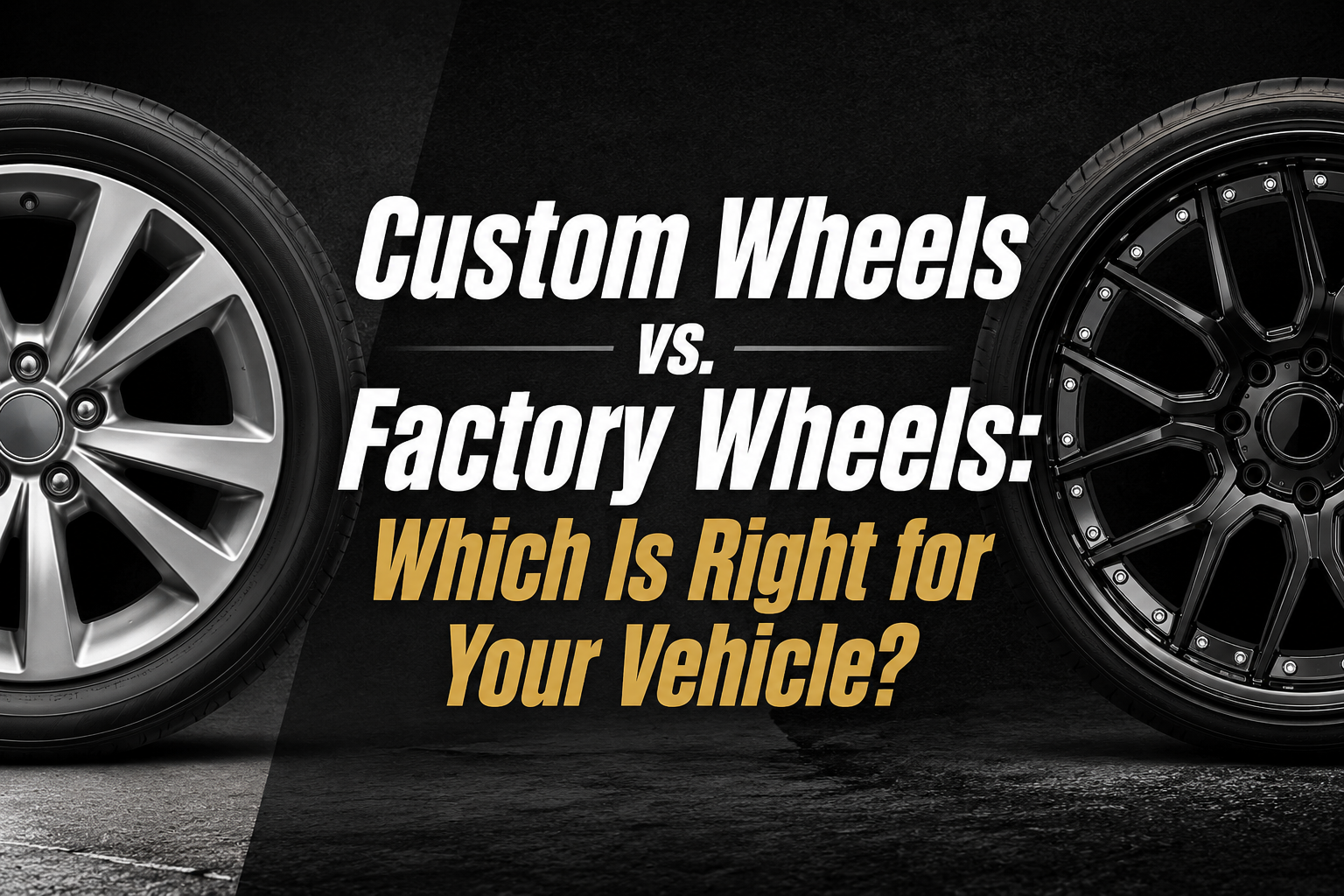
Your vehicle’s wheels influence handling, ride comfort, braking performance, fuel efficiency, and your vehicle’s overall appearance. If you’re considering an upgrade, understanding the differences between custom wheels vs. factory wheels can help you make an informed decision that aligns with your driving needs, budget, and personal style.
Both factory and custom wheels have distinct advantages. Factory wheels are engineered to meet the manufacturer’s specifications for safety, durability, and everyday performance, while custom wheels offer greater flexibility in design, materials, and size. The right choice depends on how you use your vehicle, the driving experience you want, and how much you’re willing to invest in maintenance and upgrades.
This guide compares custom wheels vs. factory wheels, explores the benefits of each option, and highlights the factors you should consider before deciding which wheels are the right fit for your vehicle.
Why Your Choice of Wheels Matters
Many drivers focus on color, finish, or design when choosing new wheels, but the decision goes much further than aesthetics. The wheels you choose can affect how your vehicle handles, how much maintenance it requires, and even how much you spend over time.
Appearance and Personal Style
Wheels are one of the first features people notice on a vehicle. Changing the wheel design, finish, or size can dramatically transform its appearance without altering the rest of the body.
Custom wheels offer virtually endless design possibilities, allowing drivers to personalize their vehicles with finishes such as gloss black, machined, bronze, chrome, or matte colors. They’re a popular choice for anyone interested in car customization, whether the goal is creating a sportier look or achieving a more refined appearance.
Factory wheels, on the other hand, are selected by the manufacturer to complement the vehicle’s original styling. While they may not stand out as much as aftermarket options, they provide a clean, balanced appearance that appeals to many drivers.
Performance and Driving Experience
The type of wheel you choose can also influence how your vehicle performs on the road. Factors such as wheel weight, size, and construction affect:
- Steering response
- Cornering stability
- Braking performance
- Ride comfort
- Fuel efficiency
Many aftermarket alloy wheels are lighter than comparable factory wheels, reducing unsprung weight and helping the suspension respond more efficiently. However, larger wheels paired with lower-profile tires can also produce a firmer ride, making it important to balance appearance with everyday comfort.
Long-Term Ownership Costs
Wheel upgrades involve more than the initial purchase price. Long-term ownership costs can vary depending on the type of wheel you choose. Some expenses to consider include:
- Tire replacement costs
- Wheel repairs
- Cleaning and maintenance
- Refinishing damaged wheels
- Replacement after road damage
Regardless of which option you choose, regular car maintenance, including tire rotations, wheel balancing, and alignment checks, helps maximize the lifespan of both your wheels and tires while maintaining safe, predictable handling.
Custom Wheels vs. Factory Wheels: Understanding the Basics
Before comparing their advantages and disadvantages, it’s helpful to understand what separates factory wheels from aftermarket options. While both perform the same essential function, they’re built with different priorities in mind.
What Are Factory Wheels?
Factory wheels, often referred to as OEM (Original Equipment Manufacturer) wheels, are supplied by the vehicle manufacturer when the car is built.
These wheels are engineered specifically for your vehicle’s:
- Weight
- Suspension geometry
- Brake system
- Tire specifications
- Ride quality
Manufacturers extensively test factory wheels to ensure they meet durability, safety, and performance standards under a wide range of driving conditions. Many drivers continue using factory wheels because they offer:
- Reliable everyday performance
- Guaranteed fitment
- Consistent ride quality
- Lower replacement complexity
- Compatibility with manufacturer specifications
What Are Custom Wheels?
Custom wheels, also known as aftermarket wheels, are produced by independent manufacturers and are available in a wide variety of sizes, materials, finishes, and designs.
Unlike factory wheels, custom wheels allow drivers to tailor their vehicle’s appearance and, in some cases, improve aspects of handling or performance.
Depending on the wheel selected, upgrades may include:
- Lightweight alloy construction
- Larger wheel diameters
- Unique spoke patterns
- Premium finishes
- Performance-focused designs
Because aftermarket wheels vary significantly in design and specifications, selecting the correct size, offset, and fitment is essential to maintaining safe handling and avoiding unnecessary wear on suspension or steering components.
Custom Wheels vs. Factory Wheels: Key Differences
Now that you understand the basics, it’s easier to compare custom wheels vs. factory wheels across the factors that matter most. Although both options serve the same purpose, they differ in appearance, performance, durability, and overall ownership costs.
Design and Appearance
One of the biggest differences between factory and custom wheels is the level of personalization they offer. Factory wheels are designed to complement the vehicle’s original styling. Manufacturers carefully select wheel sizes, finishes, and designs that appeal to a broad range of drivers while maintaining consistency across a model lineup.
Custom wheels, on the other hand, provide far more flexibility. Drivers can choose from a wide range of:
- Spoke designs
- Finishes
- Colors
- Wheel diameters
- Lip styles
This level of variety makes custom wheels a popular choice for anyone looking to make their vehicle stand out. As part of a broader car customization project, the right set of wheels can completely transform a vehicle’s appearance without requiring major body modifications.
Performance and Handling
Wheel construction has a direct impact on how a vehicle feels on the road.
Many factory wheels are engineered to balance comfort, durability, and fuel efficiency for everyday driving. They provide predictable handling and are well suited to a variety of road conditions.
Some custom wheels, particularly lightweight alloy or forged designs, can reduce unsprung weight. This may improve:
- Steering response
- Cornering stability
- Acceleration
- Braking performance
However, performance improvements depend on selecting wheels that are properly matched to your vehicle. Choosing wheels that are significantly larger or heavier than recommended can negatively affect ride quality, steering feel, and fuel economy.
The goal isn’t simply installing larger wheels. It’s selecting a combination that complements your vehicle’s intended use.
Durability
Durability is another important consideration when comparing custom wheels vs. factory wheels.
Factory wheels undergo extensive testing by vehicle manufacturers to withstand everyday driving conditions, including potholes, uneven pavement, and changing weather. Their design prioritizes long-term reliability for a wide range of drivers.
Custom wheels vary depending on their material and manufacturing process.
For example:
- Cast wheels are widely available and often more affordable.
- Forged wheels are manufactured under extreme pressure, making them lighter and generally stronger than cast alternatives.
- Alloy wheels offer an excellent balance of strength and weight, making them a popular upgrade for many vehicles.
No wheel is completely immune to damage. Large potholes, curbs, and road debris can bend or crack both factory and aftermarket wheels. If impact damage occurs during an accident, professional collision repairs may also include inspecting the wheels, tires, suspension, and alignment to identify hidden issues that could affect vehicle safety.
Cost and Long-Term Ownership
Cost is often one of the deciding factors when choosing between factory and custom wheels.
Factory wheels are generally included in the vehicle’s purchase price, and replacement OEM wheels are widely available through dealerships and authorized suppliers. Their predictable fitment can also reduce installation concerns.
Custom wheels vary considerably in price depending on:
- Material
- Manufacturing process
- Brand
- Finish
- Size
While premium aftermarket wheels often require a larger upfront investment, many drivers consider them worthwhile because of their improved appearance, lighter weight, or enhanced performance. It’s also important to consider ongoing expenses beyond the purchase price, including:
- Tire replacements
- Wheel balancing
- Alignment services
- Cleaning and protective coatings
- Repairs caused by road hazards
Regardless of which option you choose, regular inspections and proper car maintenance help maximize wheel life, improve tire wear, and maintain safe handling throughout the life of your vehicle.
Which Wheels Are Right for Your Vehicle?
The answer depends on how you drive, what you value most, and what you expect from your vehicle. Some drivers prioritize reliability and low maintenance, while others want to improve appearance or achieve a more responsive driving experience.
Considering your daily driving habits, budget, and long-term goals will help you determine whether factory or custom wheels are the better fit.
Factory Wheels May Be the Better Choice If…
Factory wheels are an excellent option for drivers who want dependable performance without making significant changes to their vehicle.
They may be the right choice if you:
- Primarily use your vehicle for daily commuting
- Prefer the manufacturer’s original appearance
- Want guaranteed compatibility with your suspension and braking systems
- Prioritize ride comfort over appearance
- Want replacement parts that are easy to source
Because factory wheels are engineered specifically for your vehicle, they provide predictable handling and require fewer fitment decisions during replacement.
Custom Wheels May Be the Better Choice If…
If you’re looking to personalize your vehicle or improve certain aspects of its performance, custom wheels offer significantly more flexibility.
They may be a good choice if you want to:
- Give your vehicle a distinctive appearance
- Choose from a wider range of finishes and styles
- Install lightweight wheels to reduce unsprung weight
- Upgrade to larger wheel sizes for aesthetic or performance reasons
- Create a more personalized driving experience through car customization
The right custom wheels can complement your vehicle without sacrificing everyday drivability. The key is selecting wheels that are compatible with your vehicle’s specifications rather than focusing solely on appearance.
What to Consider Before Upgrading Your Wheels
Upgrading your wheels involves more than selecting a design you like. Proper fitment and installation are essential for maintaining safety, handling, and long-term reliability.
Wheel Size and Fitment
Every vehicle is designed to accommodate specific wheel dimensions. Choosing the wrong size or specifications can affect steering, braking, suspension performance, and tire wear. Before purchasing new wheels, verify:
- Wheel diameter
- Wheel width
- Bolt pattern
- Offset
- Center bore
- Brake clearance
A properly fitted wheel ensures adequate clearance around suspension components while maintaining the vehicle’s intended handling characteristics.
Tire Compatibility
New wheels should always be paired with tires that match the recommended specifications for your vehicle and driving needs. Incorrect tire sizing can lead to:
- Reduced traction
- Uneven tire wear
- Inaccurate speedometer readings
- Reduced ride comfort
- Increased road noise
Selecting the correct tire and wheel combination helps maintain predictable handling and supports the safety systems built into your vehicle.
Professional Installation Matters
Even high-quality wheels won’t perform as intended if they’re installed incorrectly. Professional installation includes more than mounting the tires. It also involves:
- Precision wheel balancing
- Correct torque specifications
- Alignment verification
- Tire pressure adjustment
- Inspection for proper clearance
These steps help reduce vibration, improve tire wear, and ensure the wheels perform safely under a variety of driving conditions.
After installation, routine car maintenance remains just as important. Regular tire rotations, wheel balancing, and alignment checks help maximize the lifespan of both your wheels and tires while preserving ride quality.
If you’re replacing wheels after an accident, it’s also advisable to inspect the surrounding components. A hard impact can affect more than the wheel itself, potentially damaging suspension parts, steering components, or alignment settings. During collision repairs, technicians can identify these hidden issues and recommend the appropriate repairs before new wheels are installed.
Find the Right Wheels for Your Vehicle with Expert Guidance
Choosing between custom wheels vs. factory wheels comes down to what matters most to you. Factory wheels provide dependable everyday performance and manufacturer-approved fitment, while custom wheels offer greater flexibility to enhance your vehicle’s appearance and, in some cases, its handling.
Before upgrading your wheels, keep these considerations in mind:
- Select a wheel size that’s compatible with your vehicle.
- Ensure proper fitment to maintain safe handling and ride quality.
- Choose wheels that match your driving habits, budget, and style preferences.
- Have your wheels professionally installed, balanced, and aligned.
- Follow a regular car maintenance schedule to maximize the lifespan of your wheels and tires.
If you’re ready to upgrade, World Auto Body & Paint Center is here to help. Our experienced team provides professional car customization services to help you choose wheels that complement your vehicle and meet your performance goals. If your existing wheels have been damaged in an accident, we also offer comprehensive collision repairs, along with suspension, alignment, and wheel inspections to ensure your vehicle is safe before new wheels are installed.
Whether you’re enhancing your vehicle’s appearance or replacing damaged wheels after a collision, contact World Auto Body & Paint Center today to discuss your options and schedule a professional vehicle inspection.
Frequently Asked Questions
1. Are custom wheels better than factory wheels?
Neither option is universally better. Factory wheels are designed for reliability and compatibility, while custom wheels provide greater flexibility in appearance, materials, and performance. The best choice depends on your driving habits, budget, and personal preferences.
2. What’s the difference between OEM and aftermarket wheels?
OEM (Original Equipment Manufacturer) wheels are supplied by the vehicle manufacturer and built to factory specifications. Aftermarket, or custom, wheels are produced by independent manufacturers and offer a wider range of designs, sizes, and finishes.
3. Do custom wheels improve vehicle performance?
They can. Lightweight alloy or forged wheels may improve steering response, cornering, and braking by reducing unsprung weight. However, performance gains depend on selecting wheels that are properly matched to your vehicle.
4. Can custom wheels affect fuel economy?
Yes. Lightweight wheels may slightly improve fuel efficiency, while larger or heavier wheels can increase rolling resistance and reduce fuel economy. Proper wheel and tire selection is important for maintaining overall performance.
5. How do I choose the right wheel size?
Follow your vehicle manufacturer’s recommendations and consider factors such as wheel diameter, width, offset, bolt pattern, and tire compatibility. A professional can help ensure the wheels fit safely and perform as intended.
6. Are forged wheels worth the extra cost?
Forged wheels are generally lighter and stronger than cast wheels, making them a popular choice for performance vehicles. However, they typically cost more, so they’re best suited for drivers who value their performance and durability benefits.
7. Do custom wheels require more maintenance?
Not necessarily, but some finishes require additional care to maintain their appearance. Regular cleaning, inspections, and proper car maintenance can help extend the lifespan of both factory and custom wheels.
8. Will upgrading to custom wheels affect my vehicle warranty?
Installing custom wheels doesn’t automatically void your vehicle warranty. However, damage caused by improperly fitted or incompatible wheels may not be covered. Choosing quality wheels and professional installation helps reduce this risk.
9. Can I use my existing tires on custom wheels?
In some cases, yes. It depends on the size and specifications of both the tires and the new wheels. A professional can determine whether your current tires are compatible or if replacements are needed.
10. Should damaged wheels be repaired or replaced after a collision?
Minor cosmetic damage may sometimes be repairable, but bent or cracked wheels can compromise safety. After an accident, it’s important to have both the wheels and the surrounding suspension components inspected during collision repairs to determine whether repair or replacement is the safest option.