
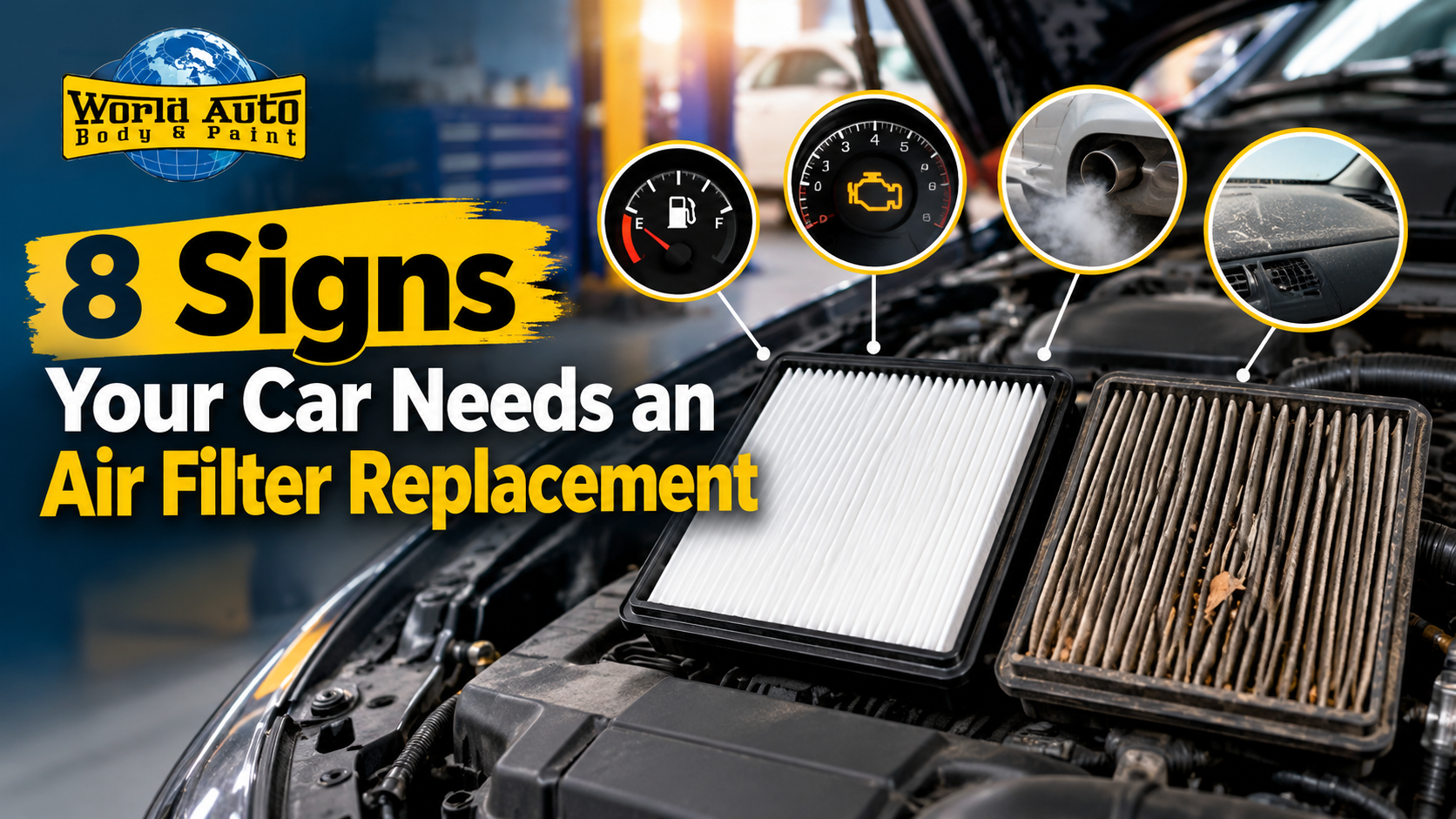
Your car’s air filters have a direct impact on engine performance, fuel efficiency, and cabin comfort. Over time, dust, dirt, pollen, and other airborne particles collect inside these filters, gradually restricting airflow and affecting the systems they protect.
Many drivers overlook air filters during routine maintenance because the warning signs can resemble other vehicle problems. Slow acceleration, unusual engine behavior, weak AC airflow, and unpleasant cabin odors may all indicate that a filter needs attention.
An air filter replacement can help restore proper airflow when a filter becomes excessively dirty, clogged, or damaged. Recognizing the symptoms early can also help you identify other maintenance concerns before they develop into more significant problems.
Drivers in Los Angeles may encounter additional airborne dust and debris while navigating busy streets, construction zones, and heavily trafficked roads. Regular filter inspections can help keep your vehicle ready for everyday driving.
8 Signs Your Car Needs an Air Filter Replacement
Most vehicles have two main types of air filters: an engine air filter and a cabin air filter. The engine air filter cleans the air entering the engine, while the cabin air filter captures dust, pollen, and other particles before air circulates through the passenger compartment.
Because these filters serve different purposes, their warning signs can vary. Understanding the difference can help you identify the possible source of a problem.
1. Reduced Engine Performance and Slow Acceleration
Does your car feel sluggish when you press the accelerator? A dirty engine air filter could be one possible cause.
Your engine needs a steady supply of clean air to support combustion. When the engine air filter becomes heavily clogged, it can restrict airflow and interfere with normal engine operation. Depending on your vehicle and the severity of the restriction, you may notice slower acceleration, reduced responsiveness, or difficulty maintaining power under demanding driving conditions.
This issue may be more noticeable when merging onto a highway, climbing a hill, or accelerating from a complete stop.
However, poor acceleration does not automatically mean the air filter is dirty. Fuel delivery issues, ignition problems, faulty sensors, and other mechanical concerns can produce similar symptoms.
What to do: Have the engine air filter inspected if your vehicle feels less responsive than usual. A technician can check the filter’s condition and assess other possible causes of reduced engine performance.
2. Decreased Fuel Efficiency
If you’re making more frequent trips to the gas station without changing your driving habits, your vehicle may need attention. A clogged engine air filter is one potential reason for declining fuel efficiency.
The engine control system adjusts fuel delivery based on several inputs, including airflow measurements. Modern vehicles can compensate for many airflow changes, so a dirty filter does not always lead to noticeably higher fuel consumption.
However, a severely restricted filter may affect engine operation, particularly in certain older vehicles or under specific driving conditions.
Other factors can also reduce gas mileage, including underinflated tires, worn spark plugs, fuel system problems, aggressive acceleration, and frequent stop-and-go driving.
What to do: Track your fuel consumption over several fill-ups rather than relying on a single tank. If mileage continues to decline, include an engine air filter check in your next car maintenance appointment.
3. Unusual Engine Sounds or Rough Idling
Your engine should generally run smoothly when the vehicle is stationary. If you notice rough idling, unusual vibrations, or inconsistent engine sounds, an air filter problem may be worth investigating.
A heavily restricted engine air filter can interfere with airflow. Depending on the vehicle, this may contribute to irregular performance, particularly when combined with other mechanical or sensor issues.
Pay attention to symptoms such as:
- Engine vibrations while stopped at a traffic light
- Uneven or fluctuating idle speed
- Hesitation when accelerating
- Occasional coughing or sputtering sounds
These symptoms are not exclusive to dirty filters. Faulty spark plugs, vacuum leaks, ignition system problems, and fuel delivery issues can also cause rough idling.
What to do: Ask a technician to inspect the filter and evaluate the engine if rough idling continues. A professional vehicle inspection can help identify the actual cause instead of relying on symptoms alone.
4. A Dirty or Discolored Engine Air Filter
Sometimes, the simplest sign is a visible one. An engine air filter that appears heavily covered in dirt, leaves, or other debris may be approaching the end of its useful life.
Most engine air filters are positioned inside a housing under the hood. Depending on your vehicle, you may be able to access and inspect the filter without specialized equipment.
A relatively clean filter may have some discoloration from normal use. That alone does not mean it needs immediate replacement. However, a filter with thick layers of dust, significant debris accumulation, visible damage, or clogged pleats deserves closer attention.
The appearance of a filter can also be misleading. Some filters trap fine particles deep within their material, so they may look reasonably clean even when their performance has declined.
What to do: Follow your vehicle manufacturer’s inspection and maintenance recommendations. If the filter is heavily contaminated, damaged, or past its recommended service interval, consider an engine air filter replacement.
5. Weak Airflow From the Car’s Vents
Does your car’s AC or heating system seem weaker than usual, even when the fan is running at a high setting? A clogged cabin air filter could be restricting airflow.
The cabin air filter captures airborne contaminants before air reaches the passenger compartment. As dust, pollen, leaves, and other particles accumulate, the filter can become obstructed. This may reduce the volume of air moving through the ventilation system.
You may notice:
- Weak airflow from the dashboard vents
- Reduced air circulation at higher fan settings
- Uneven airflow between different vents
- A ventilation system that seems less effective than before
A dirty cabin air filter can make it harder for your AC or heating system to distribute air efficiently. However, weak airflow may also result from a failing blower motor, blocked air passages, or other HVAC system problems.
What to do: Have the cabin air filter checked if airflow has gradually decreased. If the filter is clean and airflow remains weak, the ventilation system may require further diagnosis. A cabin air filter replacement may resolve the issue if the filter is responsible.
6. Unpleasant or Musty Odors Inside the Car
A musty smell when you turn on your AC or heating system can make every drive uncomfortable. In some cases, a dirty cabin air filter may contribute to the odor.
Cabin filters collect dust, pollen, leaves, and other airborne particles. As debris accumulates, the filter can trap unpleasant smells and contribute to stale air circulating through the vehicle.
Moisture in the ventilation system can also create conditions that encourage microbial growth. If the odor comes from the evaporator or another HVAC component, changing the cabin air filter alone may not resolve the problem.
Watch for these signs:
- Musty odors when the AC starts
- Stale smells that persist while driving
- Odors that become stronger at higher fan settings
- Reduced cabin air freshness
Persistent odors may also indicate water intrusion, microbial growth, or debris inside the ventilation system.
What to do: Start with a cabin air filter inspection. If the smell continues after replacing a dirty filter, have the HVAC system checked to identify moisture or contamination issues.
7. Increased Dust Inside the Cabin
If your dashboard, seats, and other interior surfaces seem to collect dust unusually quickly, your cabin air filter may not be performing as intended.
A cabin air filter is intended to capture particles entering through the ventilation system. A damaged, incorrectly fitted, or heavily contaminated filter may allow some particles to pass through or reduce effective filtration.
You may notice more dust around the dashboard vents or a general decline in cabin air cleanliness.
Keep in mind that a cabin air filter does not prevent all dust from entering your vehicle. Open windows, door seals, footwear, clothing, and the surrounding environment can also introduce dust into the cabin.
Driving through construction areas, busy roads, or dusty neighborhoods around Los Angeles may increase the amount of airborne debris your vehicle encounters.
What to do: Inspect the cabin air filter for damage, incorrect installation, or excessive contamination. If the filter is in good condition, check other possible sources of dust entering the cabin. Regular air filter maintenance can help you monitor filter condition and identify problems early.
8. Engine Warning Signs or Reduced Overall Responsiveness
A severely restricted air filter may contribute to engine performance problems, but it is important to recognize the limits of this symptom.
Modern vehicles use sensors and electronic controls to monitor engine operation. If airflow measurements fall outside expected ranges or another component malfunctions, the engine control module may store diagnostic trouble codes or illuminate a warning light.
You may also notice hesitation, inconsistent acceleration, or a change in how the engine responds under load.
However, the check engine light is not a specific indicator of a dirty air filter. It can signal a wide range of issues involving emissions systems, ignition components, sensors, fuel delivery, and engine performance.
Replacing the filter without diagnosing the warning may leave the actual problem unresolved.
What to do: If the check engine light appears or your vehicle develops persistent performance problems, arrange a diagnostic assessment. A technician can inspect the air intake system, check for stored codes, and determine if the filter is contributing to the issue.
How Often Should You Replace Your Car’s Air Filters?
The recommended service interval depends on your vehicle’s make, model, engine, filter type, and driving conditions. Many manufacturers recommend inspecting engine and cabin air filters at regular mileage intervals, with replacement schedules varying by vehicle.
Driving conditions can affect how quickly filters become contaminated. Frequent travel through dusty areas, heavy traffic, construction zones, or environments with high pollen levels may require more frequent inspections.
Your owner’s manual is the most reliable place to find the recommended maintenance schedule for your vehicle.
It is also important to remember that engine and cabin air filters have separate replacement intervals. A dirty engine air filter does not necessarily mean your cabin air filter needs replacement at the same time.
Including routine air filter checks in your maintenance schedule can help you identify excessive buildup before it starts affecting airflow.
Engine Air Filter vs. Cabin Air Filter: Which One Needs Replacing?
Both filters improve your driving experience, but they serve different functions.
| Feature | Engine Air Filter | Cabin Air Filter |
| Main purpose | Cleans air entering the engine | Filters air entering the passenger compartment |
| Common symptoms | Reduced engine responsiveness and possible fuel efficiency changes | Weak vent airflow, musty odors, and reduced cabin air cleanliness |
| Location | Usually inside an engine air intake housing | Often behind the glove compartment or beneath the dashboard |
| Replacement schedule | Depends on the manufacturer’s recommendations and driving conditions | Depends on the manufacturer’s recommendations and environmental conditions |
| Main benefit | Supports proper engine airflow | Helps maintain cleaner air and effective ventilation |
Understanding which filter is affected can help you communicate symptoms more clearly during a maintenance appointment.
Why Timely Air Filter Replacement Matters
A clean, properly fitted air filter supports the systems it serves. Replacing a filter when needed can help maintain appropriate airflow, reduce the buildup of contaminants, and prevent avoidable restrictions.
For the engine, proper airflow supports normal combustion and engine operation. For the cabin, an effective filter helps capture dust, pollen, and other airborne particles before they circulate through the ventilation system.
Routine inspections also give technicians an opportunity to identify related problems, such as damaged filter housings, loose connections, or debris inside the air intake.
Instead of waiting for several symptoms to appear, include filter checks in your regular vehicle maintenance routine. This is particularly useful if you drive frequently or encounter dusty conditions.
Get Your Car’s Air Filter Checked at World Auto Body & Paint Center
Reduced engine responsiveness, weak AC airflow, unusual odors, and declining fuel efficiency can have several possible causes. A clogged air filter may be responsible, but a proper inspection helps determine the right solution.
World Auto Body & Paint Center serves drivers in Los Angeles with automotive care, vehicle inspections, and maintenance-related services. If you’ve noticed changes in your car’s performance or cabin airflow, contact the team to discuss an inspection and confirm which services are available for your vehicle.
Addressing small maintenance concerns early can help you maintain a more comfortable and dependable driving experience.
Book an appointment to check your air filter system.
Frequently Asked Questions
1. What Are the Most Common Signs of a Dirty Car Air Filter?
Common signs include reduced engine responsiveness, possible changes in fuel efficiency, weak cabin airflow, musty odors, and visible dirt or debris on the filter. The symptoms depend on whether the engine air filter or cabin air filter is affected.
2. Can a Dirty Air Filter Cause a Car to Lose Power?
A severely restricted engine air filter can limit airflow and contribute to reduced engine performance. However, power loss can also result from fuel delivery issues, ignition problems, sensor faults, and other mechanical concerns.
3. How Often Should I Replace My Car’s Engine Air Filter?
Replacement intervals vary by vehicle and driving conditions. Check your owner’s manual for the recommended schedule, and inspect the filter more frequently if you regularly drive through dusty environments.
4. How Often Should I Replace My Cabin Air Filter?
Many vehicles require cabin air filter replacement at regular maintenance intervals, but the exact schedule differs by model. Frequent driving in dusty or polluted conditions may increase the need for inspections.
5. Can a Dirty Cabin Air Filter Affect My Car’s AC?
Yes. A clogged cabin air filter can restrict airflow through the ventilation system, making the AC seem weaker. However, refrigerant issues, blower motor problems, and other HVAC faults can cause similar symptoms.
6. Will Replacing an Air Filter Improve Gas Mileage?
A clean engine air filter supports proper airflow, but replacing a dirty filter does not guarantee better fuel economy. Modern engine management systems compensate for many airflow changes, and fuel consumption depends on several other factors.
7. Can I Replace My Car’s Air Filter Myself?
Many engine and cabin air filters are accessible and relatively simple to replace. However, access and installation procedures vary by vehicle. Always follow the manufacturer’s instructions and ensure the replacement filter fits correctly.
8. What Happens If I Don’t Replace a Dirty Air Filter?
A severely clogged engine air filter may restrict airflow and affect engine performance. A dirty cabin air filter may reduce ventilation airflow and allow unpleasant odors to persist. Prolonged neglect can also make it harder to identify related problems.
9. Is an Engine Air Filter the Same as a Cabin Air Filter?
No. An engine air filter cleans the air entering the engine, while a cabin air filter cleans air entering the passenger compartment through the ventilation system. They have different functions and separate maintenance requirements.
10. How Do I Know If My Car Needs an Air Filter Replacement?
Look for symptoms such as reduced engine responsiveness, visible filter contamination, weak vent airflow, or persistent musty odors. Because these symptoms can have other causes, an inspection is the best way to confirm if a filter needs replacement.