
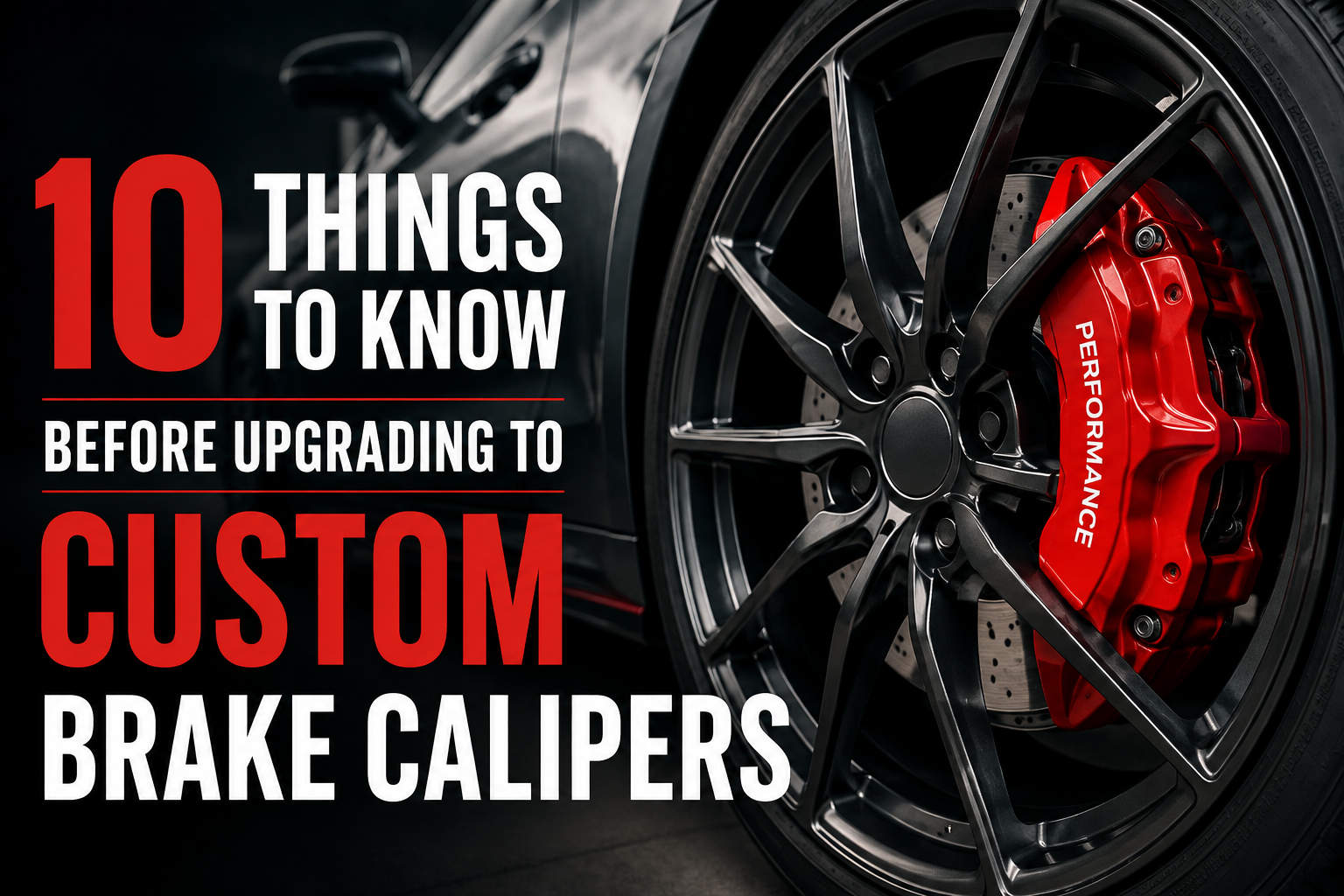
Your vehicle’s braking system needs to deliver consistent stopping power every time you press the brake pedal. Custom brake calipers can be an appealing upgrade for drivers who want to personalize their vehicle’s appearance or improve aspects of its braking setup. However, choosing the right calipers involves more than selecting a color or design that looks good behind your wheels.
Compatibility, construction, wheel clearance, driving habits, installation, and ongoing maintenance all affect whether an upgrade is appropriate for your vehicle. A cosmetic caliper finish may change the appearance without changing braking performance, while a true performance caliper upgrade can involve changes to multiple brake components.
Understanding what you’re buying before making an upgrade can help you choose a setup that fits your vehicle, driving needs, and budget. Here are 10 things to know before upgrading to custom brake calipers.
Why Consider Custom Brake Calipers?
Brake calipers are both functional and highly visible components, particularly on vehicles equipped with larger or custom wheels. Upgrading them can serve aesthetic purposes, performance goals, or a combination of both.
Improve Your Vehicle’s Appearance
Brake calipers sit directly behind the wheels, making them one of the more noticeable brake components from the outside. A fresh finish or custom color can create a more distinctive appearance, especially when paired with upgraded wheels.
Popular options include:
- Red
- Black
- Yellow
- Blue
- Silver
- Custom finishes that complement the vehicle’s exterior
A carefully selected caliper finish can tie together the wheels, paint, and other exterior elements. For drivers pursuing broader car customization, custom brake calipers can provide a relatively subtle way to add personality without changing the vehicle’s body.
Upgrade Your Braking Setup
Custom calipers aren’t always purely cosmetic. Performance-oriented calipers can be part of a larger brake system upgrade intended to improve braking characteristics.
Depending on the design, performance calipers may offer:
- Increased clamping capacity
- Improved heat management
- More consistent braking under demanding conditions
- Compatibility with larger brake rotors
- Reduced weight in certain applications
However, installing upgraded calipers alone doesn’t automatically transform a vehicle’s braking performance. The calipers need to work properly with the rotors, brake pads, brake lines, wheels, and other components.
Add a Personalized Touch
For many drivers, the primary reason to upgrade is visual. Custom calipers allow you to coordinate your brake system with other vehicle modifications without making major changes to the body.
A customized setup can complement:
- Custom wheels
- Exterior paint
- Body styling
- Performance modifications
- Other car customization projects
The important distinction is understanding whether you’re choosing calipers for appearance, performance, or both. That decision will influence the type of caliper, finish, and supporting components you should consider.
10 Things to Know Before Upgrading to Custom Brake Calipers
Before purchasing an upgrade, take the time to understand how the calipers will work with your existing brake system and vehicle configuration.
1. Know What Your Brake Calipers Actually Do
Brake calipers play a central role in converting the pressure you apply to the brake pedal into stopping force.
When you press the brake pedal, hydraulic pressure moves the caliper pistons. The pistons push the brake pads against the rotor, creating friction that slows the wheel and ultimately the vehicle.
The caliper therefore works as part of a larger system that includes:
- Brake pads
- Brake rotors
- Brake fluid
- Brake lines
- Master cylinder
- ABS components
Changing one component can affect how the overall system operates. That’s why choosing a caliper based solely on its appearance or advertised performance isn’t enough.
A properly matched brake system allows the different components to work together as intended.
2. Custom Doesn’t Always Mean Performance
The term “custom” can refer to several different types of modifications, and not all of them improve braking performance.
For example, a factory caliper may be professionally refinished in a different color. This can dramatically improve its appearance but doesn’t fundamentally change how the caliper operates.
A performance caliper upgrade is different. It may involve larger or multi-piston calipers and could require matching rotors, pads, brake lines, and compatible wheels.
Before upgrading, ask yourself what you’re trying to accomplish:
- Appearance: You want a different color or finish.
- Performance: You want a brake system better suited to demanding driving.
- Both: You want improved braking hardware that also complements your vehicle’s appearance.
Understanding this distinction can help you avoid paying for a performance upgrade when your primary goal is cosmetic or choosing a cosmetic modification when your vehicle actually needs a more comprehensive brake upgrade.
3. Check Brake Caliper Compatibility
Not every caliper will fit every vehicle. Before purchasing an aftermarket setup, you need to confirm that the calipers are compatible with your vehicle’s existing brake system.
Important specifications include:
- Vehicle make, model, and year
- Caliper mounting points
- Rotor diameter and thickness
- Brake pad dimensions
- Brake line connections
- Piston configuration
- Available space around the suspension and wheel
A caliper that doesn’t match the vehicle’s specifications can create braking problems, uneven wear, or installation complications. Professional fitment in Los Angeles helps ensure the upgraded components work correctly with the rest of the braking system.
4. Your Wheels Need Enough Clearance
One commonly overlooked consideration is the amount of space between the upgraded calipers and your wheels.
Performance calipers can be larger than factory units, particularly when paired with larger rotors. Even if the caliper technically fits the vehicle, the wheel may not provide enough clearance around the caliper body or spokes.
Before upgrading, check:
- Wheel diameter
- Wheel width
- Spoke design
- Wheel offset
- Brake rotor size
- Caliper dimensions
This becomes particularly important if you’re combining a brake upgrade with custom wheels. A professional car customization consultation in Los Angeles can help ensure the wheels and brake components work together without creating clearance issues.
5. Consider the Material and Construction
Custom brake calipers are available in different materials and designs, and construction can influence their weight, strength, heat management, and price.
You’ll commonly encounter options such as:
- Cast calipers: Often more affordable and suitable for many everyday applications.
- Forged calipers: Manufactured under pressure and typically valued for their strength and weight characteristics.
- Multi-piston calipers: Use multiple pistons to distribute pressure across the brake pad and can be found on performance-oriented systems.
More pistons don’t automatically mean better braking for every vehicle. The entire brake system needs to be appropriately matched to the vehicle’s weight, rotor size, brake pads, tires, and intended use.
6. Think About Your Driving Habits
The best brake setup for a daily commuter may be very different from what’s appropriate for a vehicle regularly driven in demanding conditions.
Consider how you primarily use your vehicle:
- Daily commuting: A reliable setup focused on consistent stopping performance and everyday comfort may be sufficient.
- Highway driving: A quality brake system with good heat management can provide confidence during repeated braking and long-distance driving.
- Spirited driving: Drivers who frequently take corners or drive aggressively may benefit from components engineered for higher thermal demands.
- Track use: Track driving places significantly greater demands on brakes. Specialized performance components, appropriate brake pads, rotors, fluid, and cooling may all be necessary.
Upgrading beyond what your driving habits require can add unnecessary cost and complexity. The goal should be to choose components that match how you actually drive.
7. Choose the Right Finish and Color
If appearance is one of your main reasons for choosing custom brake calipers, the finish deserves careful consideration. Brake calipers are exposed to high temperatures, road debris, brake dust, moisture, and cleaning chemicals, so the finish needs to withstand demanding conditions.
Popular brake caliper colors include:
- Red
- Black
- Blue
- Yellow
- Silver
- Custom colors that complement the vehicle
You may also encounter painted and powder-coated finishes. Powder coating can provide a durable finish when properly applied, while high-temperature brake caliper paint is another option for certain applications.
Think about how the calipers will look alongside your wheels and exterior paint. A bold color can create contrast, while a darker or more subtle finish can provide a refined appearance.
8. Understand the Total Cost
The price of the calipers themselves is only one part of the total upgrade cost. Depending on the setup, you may also need additional components or services.
Potential costs include:
- Brake calipers
- Brake pads
- Brake rotors
- Brake lines
- Brake fluid
- Installation labor
- Wheel modifications or replacement
- Finishing or customization
A performance-oriented upgrade can become significantly more expensive if larger rotors or different wheels are required for proper fitment.
Before committing to an upgrade, ask for a complete estimate that accounts for all necessary components and installation work. This makes it easier to compare options and avoid unexpected expenses.
9. Professional Installation Matters
Brake calipers are safety-critical components, so proper installation is essential. An incorrectly installed caliper or improperly connected brake line can affect braking performance and create serious safety risks.
Professional installation in Los Angeles may include:
- Removing the existing calipers
- Installing the new calipers correctly
- Connecting brake lines
- Replacing or inspecting brake pads and rotors
- Bleeding the brake system when necessary
- Checking for leaks
- Confirming proper wheel clearance
- Testing braking performance
Proper torque specifications and brake system procedures should be followed throughout the installation.
After the work is completed, the braking system should be tested carefully before the vehicle returns to normal driving. Professional installation provides an additional level of confidence that the components are fitted correctly and operating as intended.
10. Custom Calipers Still Need Regular Maintenance
Upgrading your brake calipers doesn’t eliminate the need for routine brake care. Like other braking components, custom calipers can accumulate brake dust and road contaminants and may develop wear or corrosion over time.
Regular car maintenance should include checking the braking system for signs of trouble, such as:
- Uneven brake pad wear
- Brake fluid leaks
- Unusual grinding or squealing
- Vehicle pulling to one side
- Excessive heat from one wheel
- Visible corrosion or physical damage
- Reduced braking performance
Keeping the calipers clean can also help preserve their appearance. However, avoid using harsh cleaning products that aren’t suitable for brake components or their finishes.
Signs Your Brake Calipers Need Professional Attention
Even high-quality brake calipers can eventually require inspection or service. Recognizing unusual symptoms early can help prevent a minor problem from becoming a larger brake system issue.
Pay attention to:
Uneven Braking
If your vehicle pulls to one side when you apply the brakes, one caliper may not be operating correctly. Other brake or suspension issues can produce similar symptoms, so professional diagnosis is important.
Brake Fluid Leaks
Visible brake fluid around a caliper or wheel should never be ignored. A leak can reduce hydraulic pressure and compromise braking performance.
Excessive Heat From One Wheel
If one wheel feels significantly hotter than the others after normal driving, a sticking caliper may be preventing the brake pad from releasing properly.
Uneven Brake Pad Wear
One brake pad wearing considerably faster than another can indicate a caliper or related brake system problem.
Unusual Noises
Grinding, persistent squealing, clicking, or other unfamiliar noises can indicate an issue requiring inspection.
When Brake Caliper Damage May Be Related to a Collision
Brake calipers can also be affected by a significant impact. A collision involving the wheel or front suspension may damage or displace components within the braking system, even when the caliper itself doesn’t show obvious external damage.
After an accident, a professional vehicle inspection can help identify issues involving:
- Brake calipers
- Brake rotors
- Brake lines
- Wheels
- Suspension components
- Steering components
- Wheel alignment
If collision-related damage is found, comprehensive collision repairs can address the affected components rather than treating only the most visible damage.
A brake inspection is particularly important before installing new custom calipers after an accident. Starting with a properly functioning brake system helps ensure the upgrade is installed on a sound foundation.
Upgrade Your Brake Calipers With the Right Setup
Upgrading to custom brake calipers can be an effective way to personalize your vehicle or enhance its braking setup, but the right upgrade requires more than choosing a color or design. Compatibility, wheel clearance, construction, driving habits, installation, and maintenance all deserve consideration before making a decision.
Before moving forward, make sure you:
- Choose calipers compatible with your vehicle and existing brake components.
- Confirm that your wheels provide adequate clearance.
- Consider whether you’re upgrading for appearance, performance, or both.
- Compare the complete installation cost rather than the caliper price alone.
- Have safety-critical brake components installed and inspected professionally.
- Keep the upgraded system clean and include it in your regular car maintenance routine.
If you’re considering custom brake calipers as part of a larger car customization project, the team at World Auto Body & Paint Center can help you evaluate your options and ensure your vehicle receives the appropriate professional attention.
If your braking components or wheels have been damaged in an accident, a thorough vehicle inspection can help identify hidden problems before upgrades are installed. Our team can also assist with appropriate collision repairs when accident-related damage affects the vehicle.
Contact World Auto Body & Paint Center to discuss your customization goals and determine the right approach for your vehicle.
Frequently Asked Questions
1. What Are Custom Brake Calipers?
Custom brake calipers are aftermarket or modified brake calipers that can differ from a vehicle’s original components in appearance, construction, size, or performance characteristics. Some are primarily cosmetic, while others are engineered for performance applications.
2. Do Custom Brake Calipers Improve Braking Performance?
They can, depending on the type of caliper and the rest of the brake system. Performance calipers may provide benefits such as improved heat management or increased clamping capacity, but the entire system needs to be properly matched for meaningful performance improvements.
3. Are Custom Brake Calipers Worth the Cost?
They can be worthwhile if they meet your goals. Drivers focused on appearance may choose custom finishes, while those seeking performance may benefit from a properly matched brake upgrade. The value depends on your vehicle, driving habits, and budget.
4. Can I Install Custom Brake Calipers on Any Vehicle?
No. Brake calipers need to be compatible with your vehicle’s mounting points, rotors, brake pads, hydraulic system, and other components. Professional fitment is recommended before purchasing an aftermarket setup.
5. Do Custom Brake Calipers Fit Behind Any Wheels?
No. Larger calipers may require additional clearance that isn’t available with every wheel. Wheel diameter, width, offset, spoke design, and caliper dimensions should all be checked before installation.
6. What’s the Difference Between Painted and Powder-Coated Brake Calipers?
Both can provide a customized appearance, but the application process and durability can differ. Powder coating uses a specialized coating process, while high-temperature brake caliper paint is formulated for use in demanding brake environments. The appropriate option depends on the specific caliper and desired finish.
7. How Much Do Custom Brake Calipers Cost?
Costs vary significantly based on the vehicle, caliper type, brand, materials, finish, and whether additional components such as rotors, pads, or brake lines are required. Installation can also add to the total cost.
8. How Long Do Custom Brake Calipers Last?
Their lifespan depends on the caliper’s construction, driving conditions, maintenance, exposure to heat and road contaminants, and overall brake system condition. Regular inspections can help identify wear or damage before it affects performance.
9. How Often Should Custom Brake Calipers Be Inspected?
They should be inspected as part of routine brake and car maintenance. Additional inspections are recommended if you notice pulling, unusual noises, uneven pad wear, fluid leaks, excessive heat, or changes in braking performance.
10. Can Brake Calipers Be Damaged in a Collision?
Yes. A significant collision or wheel impact can affect brake calipers and related components, including rotors, brake lines, suspension parts, and wheel alignment. A professional vehicle inspection can help identify damage that isn’t immediately visible.