
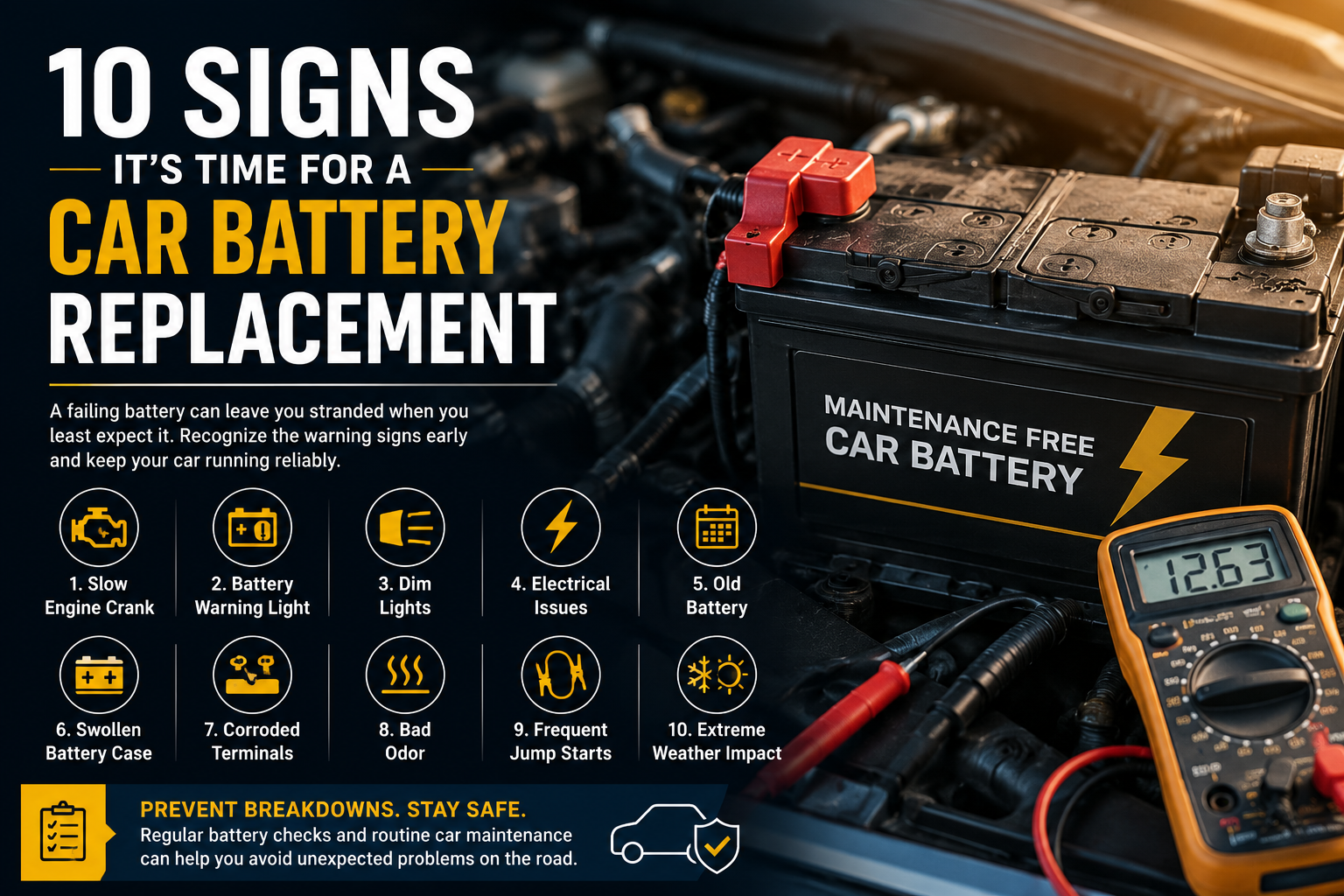
A failing battery rarely stops working without warning. In many cases, car battery replacement becomes necessary only after drivers overlook early signs such as slow engine starts, dim lights, or recurring electrical issues. Recognizing these warning signs early can help you avoid unexpected breakdowns, reduce stress, and keep your vehicle operating reliably.
Did you know, according to AAA, battery failures led to approximately 7 million roadside assistance calls across the United States in 2024. This highlights how common battery-related breakdowns are and why recognizing the warning signs of a failing battery can help you avoid being stranded unexpectedly.
While every battery eventually reaches the end of its service life, paying attention to early warning signs can help you replace it before it leaves you stranded. Routine car maintenance, including periodic battery testing and electrical system inspections, plays an important role in preventing unexpected failures and extending the life of your vehicle.
This guide covers 10 signs that indicate it may be time for a car battery replacement, along with practical tips to help you identify battery problems before they become major inconveniences.
Why Recognizing Battery Problems Early Matters
Battery issues often develop gradually rather than all at once. A vehicle may continue to start normally for weeks while the battery slowly loses its ability to hold a charge. Addressing these problems early can help you avoid unnecessary repairs and reduce the risk of being stranded.
Avoid Unexpected Breakdowns
One of the biggest advantages of recognizing battery problems early is avoiding an unexpected breakdown.
A weak battery may still start your vehicle several times before finally failing. Unfortunately, it often happens when you least expect it, such as:
- Before work
- During a road trip
- At the grocery store
- Late at night
- In extreme weather conditions
Replacing a deteriorating battery before it completely fails gives you greater confidence every time you drive.
Protect Your Vehicle’s Electrical System
Your battery supplies power to much more than the starter motor. It also supports many of your vehicle’s electrical components, including:
- Interior and exterior lighting
- Infotainment systems
- Power windows and locks
- Dashboard electronics
- Safety features
- Electronic control modules
When the battery begins to fail, these systems may not receive consistent voltage, leading to intermittent electrical issues. In some cases, what appears to be a battery problem could indicate a fault within the charging system, making professional diagnosis important.
Prevent Being Stranded at the Worst Time
Few vehicle problems are as inconvenient as turning the key or pressing the start button only to discover your car won’t start.
Routine battery testing during scheduled car maintenance appointments can identify declining battery performance before complete failure occurs. If starting problems begin shortly after a collision, it’s also worth scheduling a professional inspection. Impact damage can sometimes affect battery connections, wiring, or other electrical components that may require further evaluation during collision repairs.
10 Signs It’s Time for a Car Battery Replacement
Your battery usually provides several warning signs before it reaches the end of its lifespan. Paying attention to these symptoms can help you replace the battery before it fails completely.
1. Your Engine Cranks Slowly
A slow engine crank is one of the earliest and most noticeable signs that you may need a car battery replacement.
Instead of starting immediately, you might notice that the engine turns over more slowly than usual before finally starting. This happens because the battery is no longer supplying enough power to crank the engine efficiently.
Slow cranking often becomes more noticeable:
- On cold mornings
- After the vehicle has been parked overnight
- When the battery is nearing the end of its lifespan
Although a weak battery is the most common cause, similar symptoms can also result from starter or charging system issues. If slow starts become more frequent, having the battery professionally tested is the best way to identify the source of the problem.
2. The Battery Warning Light Stays On
The battery warning light on your dashboard doesn’t always mean the battery itself has failed. Instead, it indicates that something within the charging system requires attention.
Possible causes include:
- A weak battery
- A failing alternator
- Loose or damaged battery cables
- Corroded terminals
- Faulty electrical connections
Ignoring this warning light can eventually leave you with a vehicle that won’t start.
A diagnostic inspection can determine whether you need a car battery replacement or if another component within the charging system is responsible for the warning.
3. Your Headlights or Interior Lights Are Dim
Your vehicle’s lighting system depends on a healthy battery and charging system to operate properly.
If you notice that your headlights appear dimmer than usual, especially while idling, or your interior lights flicker when starting the engine, your battery may no longer be providing consistent power.
Other related symptoms include:
- Dashboard lights dimming briefly during startup
- Power windows operating more slowly
- Interior lights flickering
- Infotainment screens taking longer to power on
Although these issues can sometimes point to alternator problems, they’re also common signs of a weakening battery. Testing the battery before it completely fails can help prevent unexpected starting problems and reduce the likelihood of roadside breakdowns.
Even if your vehicle still starts most days, battery performance can continue to decline over time. The following signs often indicate that the battery is approaching the end of its service life and should be tested before it fails completely.
4. Your Car Needs Frequent Jump Starts
Needing a jump start once after accidentally leaving your headlights on isn’t unusual. Requiring jump starts repeatedly, however, is a strong indication that something isn’t working as it should.
A healthy battery should retain enough charge to start your vehicle under normal driving conditions. If you’re relying on jumper cables more often, possible causes include:
- A battery that’s no longer holding a charge
- An aging battery nearing the end of its lifespan
- A charging system problem
- An electrical drain while the vehicle is parked
Although a jump start may get you back on the road temporarily, it doesn’t solve the underlying issue. Having the battery and charging system tested can determine whether a car battery replacement is necessary.
5. Electrical Accessories Stop Working Properly
Modern vehicles rely heavily on electrical power. As battery performance declines, you may notice certain features responding more slowly or behaving unpredictably.
Common examples include:
- Power windows moving slowly
- Door locks responding inconsistently
- Infotainment systems restarting unexpectedly
- Dashboard displays flickering
- Heated seats taking longer to warm up
While these issues don’t always point directly to the battery, they often indicate that the electrical system isn’t receiving stable voltage.
If you’ve recently installed aftermarket lighting, upgraded speakers, or other accessories through car customization, additional electrical demand can place more strain on an aging battery. A professional inspection can confirm whether the battery is keeping up with your vehicle’s power requirements.
6. The Battery Is More Than Three to Five Years Old
Even if your vehicle appears to start normally, age alone can be a reason to monitor battery performance more closely.
Most car batteries last between three and five years, although several factors can shorten or extend that lifespan, including:
- High temperatures
- Frequent short trips
- Extended periods without driving
- Heavy electrical usage
- Driving habits
Once a battery reaches this age range, periodic testing becomes increasingly important. Replacing an aging battery before it fails can help prevent inconvenient breakdowns.
7. You Notice Corrosion Around the Battery Terminals
Battery terminals should remain clean and securely connected. If you notice a white, blue, or greenish buildup around the terminals, corrosion may be interfering with the battery’s ability to deliver power efficiently.
Corrosion can contribute to:
- Starting difficulties
- Reduced charging performance
- Poor electrical connections
- Intermittent power loss
Cleaning minor corrosion may improve the connection temporarily. However, if corrosion returns repeatedly or the battery is already several years old, it could indicate that the battery is deteriorating internally.
8. Your Battery Case Is Swollen, Cracked, or Leaking
Physical damage is one of the clearest signs that a battery should be replaced as soon as possible.
A battery case may become swollen due to excessive heat or internal chemical reactions. Cracks or leaks can expose corrosive battery acid and reduce the battery’s ability to operate safely.
Signs of physical battery damage include:
- A bulging battery case
- Visible cracks
- Fluid leakage
- Strong sulfur or rotten egg odors
- Loose or damaged casing
A damaged battery should never be ignored. Continuing to drive with a leaking or swollen battery can increase the risk of electrical problems and further damage to nearby components.
If the battery housing appears damaged following an accident, it’s also a good idea to have the surrounding electrical system inspected. During collision repairs, technicians can identify damage to battery mounts, cables, wiring, or other components that may not be immediately visible.
Not every battery failure happens overnight. In some cases, reduced performance becomes noticeable only under certain conditions, making it easy to dismiss the warning signs until the vehicle refuses to start.
9. Your Vehicle Has Been Sitting Unused for a Long Time
Leaving a vehicle parked for several weeks or months can significantly reduce battery performance.
Even when the engine is off, certain systems continue drawing small amounts of power. Over time, this natural drain can discharge the battery, especially if it was already weakening before the vehicle was parked.
Common situations that can affect battery health include:
- Extended holidays
- Seasonal vehicles
- Working from home and driving less frequently
- Long-term vehicle storage
If your vehicle has been sitting unused, avoid assuming the battery simply needs a jump start. Testing its condition can determine whether it still holds a reliable charge or if a car battery replacement is the better long-term solution.
10. Your Vehicle Won’t Start Consistently
Intermittent starting problems are often one of the final warning signs before a battery fails completely.
You may notice that your vehicle starts normally one day but struggles or refuses to start the next. This inconsistency usually means the battery can no longer provide dependable power every time you turn the key or press the start button.
Other possible causes include:
- A failing alternator
- A worn starter motor
- Loose battery connections
- Corroded terminals
- Electrical wiring issues
Because several components can produce similar symptoms, a professional diagnosis is the most effective way to identify the root cause instead of replacing parts unnecessarily.
How to Extend the Life of Your Car Battery
Although every battery eventually wears out, a few simple habits can help maximize its lifespan and reduce the chances of unexpected failure.
Drive Your Vehicle Regularly
Regular driving allows the alternator to recharge the battery. Short trips that don’t give the battery enough time to recharge can gradually reduce its overall lifespan.
If you don’t drive often, consider taking your vehicle on a longer drive occasionally to help maintain battery health.
Keep Battery Terminals Clean
Clean battery terminals help maintain a strong electrical connection between the battery and your vehicle.
Inspect the terminals periodically for corrosion or loose connections. Addressing minor buildup early can improve charging efficiency and help prevent starting problems.
Turn Off Electronics Before Leaving the Vehicle
Leaving headlights, interior lights, charging cables, or other accessories running after switching off the engine can drain the battery faster than many drivers realise.
Making it a habit of checking that all electronics are switched off before leaving your vehicle can help preserve battery life.
Schedule Routine Car Maintenance
Routine car maintenance helps identify battery wear before it develops into a breakdown.
During scheduled maintenance, technicians can:
- Test battery voltage
- Inspect charging system performance
- Check battery terminals and cables
- Identify electrical issues before they become major repairs
Regular inspections provide peace of mind, particularly before long road trips or during periods of extreme weather.
When Battery Problems Could Signal Something More Serious
Although batteries are responsible for many starting problems, they aren’t always the source of the issue.
Several other components work together to start and power your vehicle, including the alternator, starter motor, wiring, and charging system. Problems with any of these components can produce symptoms similar to a failing battery.
If electrical problems begin shortly after an accident, they may also indicate hidden damage beyond the battery itself. An impact can affect:
- Battery cables and terminals
- Wiring harnesses
- Electrical connectors
- Battery mounting brackets
- Charging system components
In these situations, a professional inspection is the safest approach. Technicians performing collision repairs can assess both visible and hidden damage to determine whether the battery, charging system, or another electrical component requires attention.
Likewise, if you’ve recently upgraded your vehicle with aftermarket lighting, premium audio equipment, or other features through car customization, ensuring the electrical system can safely support the additional load helps prevent unnecessary strain on the battery.
Don’t Ignore the Warning Signs of a Failing Battery
While many battery issues are caused by normal wear and aging, electrical problems that appear after a collision shouldn’t be overlooked. Hidden damage to battery cables, wiring, or charging system components can produce symptoms similar to a failing battery and may require a more comprehensive inspection.
At World Auto Body & Paint Center, our experienced technicians perform thorough vehicle inspection services to identify visible and hidden damage following an accident. If a collision has affected your vehicle’s electrical system, our team can recommend the appropriate services to help keep your vehicle looking and performing its best, like:
If you’ve noticed battery warning signs after an accident or want peace of mind about your vehicle’s condition, schedule a professional inspection with our team today.
Frequently Asked Questions
1. How long does a car battery usually last?
Most car batteries last between three and five years. However, factors such as extreme temperatures, frequent short trips, driving habits, and regular maintenance can affect their lifespan.
2. What are the first signs of a failing car battery?
Common early signs include slow engine cranking, dim headlights, dashboard battery warning lights, frequent jump starts, and inconsistent starting.
3. Can a bad car battery damage my vehicle?
A failing battery doesn’t typically damage the vehicle itself, but it can affect the performance of electrical systems and leave you stranded if it fails completely.
4. How do I know if it’s the battery or the alternator?
Both components can produce similar symptoms. A professional battery and charging system test is the most reliable way to determine whether the battery, alternator, or another electrical component is causing the problem.
5. Why does my car keep needing jump starts?
Repeated jump starts often indicate that the battery can no longer hold a sufficient charge. However, alternator problems or electrical drains can also contribute to this issue.
6. Can hot weather shorten my car battery’s lifespan?
Yes. High temperatures can accelerate the chemical reactions inside a battery, causing it to deteriorate more quickly than it would under moderate conditions.
7. Should I replace my battery before it completely dies?
Yes. Replacing a battery after it begins showing warning signs can help prevent unexpected breakdowns and reduce the risk of becoming stranded.
8. Can an accident affect my car battery or electrical system?
Yes. A collision can damage battery cables, wiring, electrical connectors, or charging system components, even if the battery itself appears undamaged. A professional inspection can identify any hidden issues.
9. How can I make my car battery last longer?
Regular Car Maintenance, keeping the battery terminals clean, driving your vehicle consistently, and avoiding unnecessary electrical drain can all help extend battery life.
10. When should I have my vehicle professionally inspected for battery or electrical problems?
Schedule an inspection if your vehicle experiences repeated starting problems, dashboard warning lights, or electrical malfunctions, or if these symptoms develop after a collision. Early diagnosis can help prevent more extensive repairs and ensure your vehicle remains safe and reliable.